











Laurina Fazioli, University of Haïfa, Israël
CAP

Abstract:
Background. Autism Spectrum Disorder (ASD) is a group of neurodevelopmental disorders with complex and diverse impacts on cognition and behavior. Sensory symptoms are increasingly recognized as a core phenotype of ASD, yet the interrelation of these symptoms with cognitive processes remains poorly understood. At the intersection of perception and behavior is the process of perceptual decision-making, which relies on the ability to take uncertainty into account at two levels of processing: (1) at first-order, these uncertainties are related to sensory evidence, prior knowledge, and the expected outcome of the decision, and (2) at the second-order level, uncertainty concerns one's ability to estimate these uncertainties. However, whether and how autistic individuals represent these uncertainties and take them into account is still unknown.
Objectives. Here, we aimed to investigate first- and second-order perceptual decision-making, using the Bayesian perception framework—a theoretical framework that models perception as a process of probabilistic inference, combining sensory uncertainty, prior knowledge, and reward information.
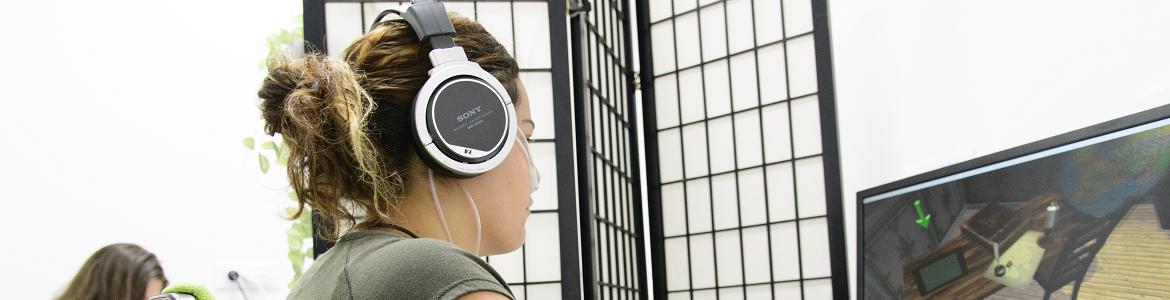
Methods. In three experiments, autistic (n = 52) and non-autistic (n = 93) participants performed orientation categorization tasks. Participants simultaneously reported the category orientation distribution of a Gabor stimulus and their perceptual decision confidence (four-level rating) by pressing one of eight keys. In each experiment, we independently manipulated and measured the contribution of one Bayesian component to both levels of perceptual decisions. Notably, we manipulated priors, sensory evidence, and reward by varying base rate, stimulus contrast, and a point system, respectively.
Results. Our research reveals that autistic individuals integrate all Bayesian components in a suboptimal, yet typical manner, during first-order perceptual decisions. However, autistic participants demonstrated qualitative differences at higher-order levels of perceptual inference. Indeed, unlike non-autistic participants, autistic participants’ metacognitive abilities depended on which decision component was manipulated and were enhanced than that of non-autistic participants, specifically when decisions were adjusted for sensory uncertainty.
Conclusions. Our research challenges dominant hypotheses formulated across various fields (e.g., generally reduced metacognitive abilities, reduced integration of priors, etc.), and demonstrates that investigating perceptual metacognition is a promising direction in characterizing the core phenotype of autism, as perception at high-order levels of processing may account for atypical reactions to perception.
CRNL | CH Le Vinatier | Bâtiment 462 Neurocampus Michel Jouvet | Amphithéâtre | 95 Boulevard Pinel | 69500 Bron