




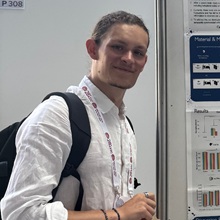
Bruno Michelot, doctorant CAP
Bruno Michelot, doctorant CAP
J'ai le plaisir de vous convier à ma soutenance de thèse intitulée "Déceler les indices cachés de la conscience grâce aux outils d'intelligence artificielle : explorations longitudinales du retour de la conscience après un coma, du comportement aux mesures multimodales synchronisées". Vous trouverez un résumé en PJ.
Celle-ci aura lieue le jeudi 18 décembre à 15h dans l’amphithéâtre du Neurocampus (Bâtiment 462 - Neurocampus, 95 Bd Pinel, 69500 Bron).
Le jury sera composé de :
- Pr. Catherine Tallon-Baudry : Rapporteure
- Pr. Marzia De Lucia : Rapporteure
- Pr. Jacques Luauté : Examinateur
- Pr. Fabrice Ferré : Examinateur
- Pr. Fabien Perrin : Directeur de thèse
- Pr. Stefan Duffner : Co-directeur de thèse
Pour celles et ceux qui ne pourront pas être sur place, la soutenance sera retransmise en visioconférence au lien suivant : https://univ-lyon1.webex.com/meet/fabien.perrin
La soutenance sera suivi d'un pot à la cafétéria du Neurocampus auquel vous êtes toutes et tous convié.e.s !
Abstract
Consciousness can abruptly disappear following a severe brain injury, leading to coma, a state defined by a complete absence of responsiveness. Recovery may then proceed along the spectrum of disorders of consciousness (DoC), during which patients gradually regain cognitive and behavioral capacities. Assessing these patients is a critical challenge, as it determines diagnosis, prognosis, therapeutic strategies, and ethical decisions.
However, current evaluation methods remain imperfect: standard behavioral scales lack continuity and granularity, leading to diagnostic errors and failing to fully capture the subjective judgment of caregivers, which appears central to their clinical decisions and often proves diagnostically accurate. Meanwhile, complementary brain-based measures reveal dissociations between cerebral activity and observable behavior. In this context, artificial intelligence technologies open the way toward a more reliable and integrative behavioral assessment, enabling continuous, objective, fine-grained, and multimodal analysis.
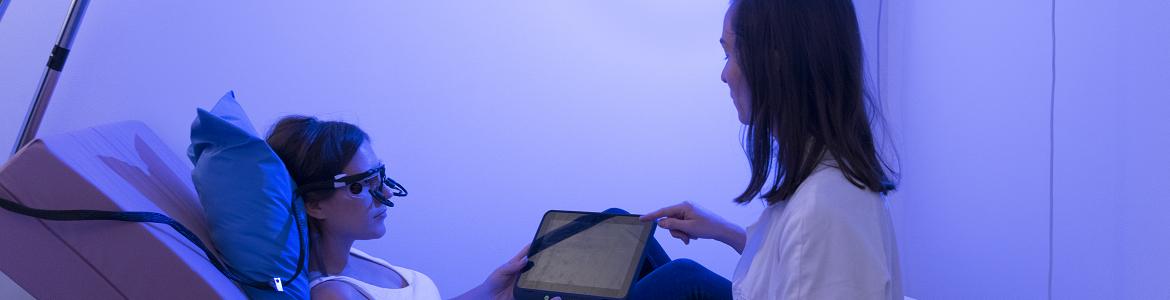
In a first study, we developed a behavioral assessment tool based on computer vision, machine learning, and model explainability. We validated its relevance in healthy individuals by showing that our models could discriminate between different environmental contexts (e.g., rest, music, autobiographical narratives) from subtle, spontaneous behavioral signatures, highlighted by explainability.
In a second study, we explored caregivers’ subjectivity in the assessment of DoC patients through (1) a prospective approach showing that caregivers significantly engage their subjective judgment, use specific vocabulary (e.g., consciousness, presence, arousal), and rely on precise bodily and behavioral cues to describe patients; and (2) the application of our tool, showing that machine learning models can significantly predict caregivers’ subjective evaluations of consciousness, presence, and arousal, particularly through specific instances of facial expressions, head movements, and gaze behavior. We also observed that caregivers rely on distinct behavioral dimensions depending on each patient’s idiosyncratic characteristics.
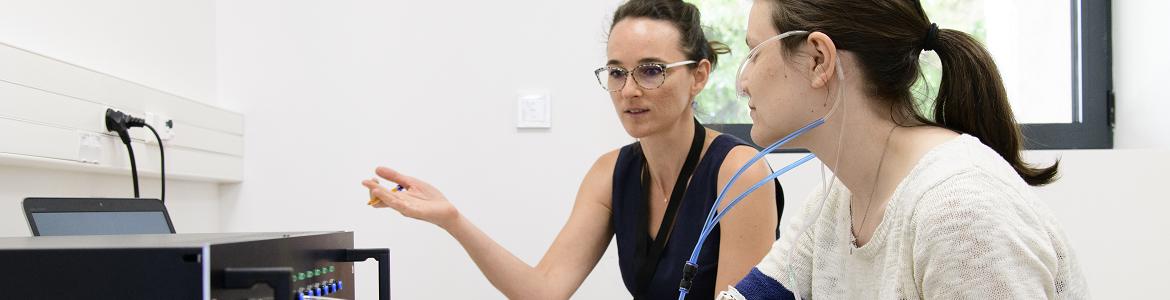
In a third study, we conducted a longitudinal, multimodal, and synchronized investigation of behavior, brain, and cardiac activity in DoC patients. We demonstrate the relevance of our tool for analyzing modulations across modalities according to consciousness states, characterizing individual multimodal recovery profiles adding additional granularity to the study of brain-behavior dissociations, and revealing fine-grained brain–body–environment coupling dynamics. These couplings were absent in comatose patients, present but altered in unresponsive wakefulness syndrom (UWS) and minimally conscious state (MCS) patients. This work opens important clinical perspectives by providing a means to refine consciousness recovery assessment, and theoretical perspectives by contributing to an integrated, individualized, and dynamic understanding of the mechanisms underlying consciousness and its recovery.
Keywords: Coma, Disorders of consciousness, Computer vision, Machine learning, Explainability, Caregivers’ subjectivity, Multimodality, Synchronization
CRNL | CH Le Vinatier | Bâtiment 462 Neurocampus Michel Jouvet | Amphithéâtre | 95 Boulevard Pinel | 69500 Bron