




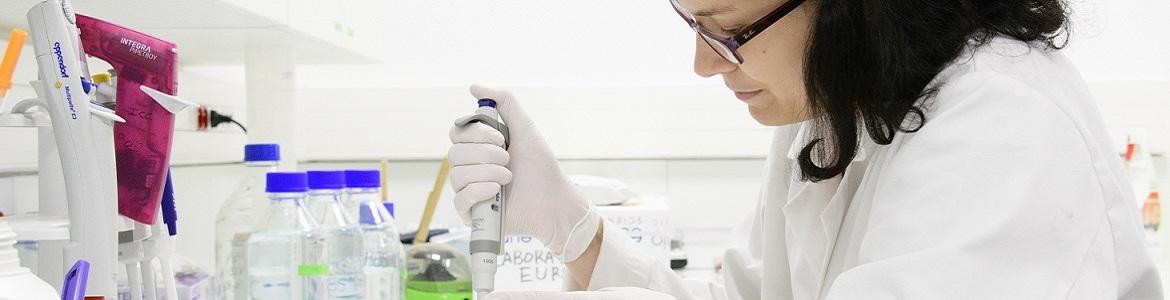
Coumarane Tirou, Doctorant, Groupe MEL & MEMO de l'Equipe EDUWELL du CRNL
Coumarane Tirou, Doctorant, Groupe MEL & MEMO de l'Equipe EDUWELL du CRNL

J’ai le plaisir de vous convier à ma soutenance de thèse intitulée « Predict, Replay, and Change: identifying the neural mechanisms of statistical learning in humans ». Vous trouverez abstract et résumé en PJ.
Elle se déroulera en français (diaporama en anglais) le vendredi 26 juin à 14h00 dans l'amphithéâtre du bâtiment 462 Neurocampus Michel Jouvet (95 Boulevard Pinel, 69500 Bron).
Le jury sera composé de :
- Pr. Nina Kazanina : Rapporteure (PR, Univ. Genève)
- Pr. Philippe Albouy : Rapporteur (PA, CR, Univ. Laval)
- Dr. Fosca Al Roumi : Examinatrice (IR, CEA)
- Pr. Matteo di Volo : Examinateur (PR, Univ. Lyon 1)
- Dr. Jean-Rémi King : Invité (CR, CNRS, Meta)
- Dr. Romain Quentin : Directeur de thèse (CR, Inserm)
- Pr. Dezso Németh : Co-directeur de thèse (PR, CR, Inserm)
La soutenance sera précédée d’un workshop « Memory and learning in humans » le matin de 10h à 12h.
- 10h00 : « The neurobiology of symbols (and structures in which they participate) », Nina Kazanina, Professeure à l’Université de Genève (Suisse)
- 10h40 : “How do humans compress information in memory? The language of Thought hypothesis”, Fosca Al Roumi, Ingénieure de Recherche au CEA Paris-Saclay
- 11h20 : “Cross-frequency coupling as a signature of memory functions in humans”, Philippe Albouy, Professeur associé à l’Université Laval – Québec (Canada)
Pour celles et ceux qui ne pourront pas être sur place, la soutenance sera retransmise en visioconférence. Le lien sera communiqué le jour de la soutenance.
La soutenance sera suivie d’un pot à la cafétéria du Neurocampus auquel vous êtes toutes et tous convié.e.s !
Au plaisir de vous y retrouver,
Coumarane Tirou
Abstract
Learning is the astonishing capability through which the brain enables us to adapt to a constantly changing environment. The mammalian brain represents the most efficient learning architecture identified to date. A key ability rooted in its efficiency is statistical learning, the ability to extract structured sensory patterns from a noisy environment. This process is fundamental to cognition, yet how the brain learns complex regularities remains unclear. Recent advances in multivariate analyses applied to neuroimaging data point to three candidate neural mechanisms: predictive coding, neural replay, and representational change.
Predictive coding posits that the human brain continuously anticipates the future on the basis of an internal model of the world that it uses to make predictions. Neural replay is the spontaneous neural reactivation of recent experiences in a time-compressed manner during periods of rest and sleep. Representational change is the gradual increase in brain pattern similarity between related stimuli over the course of learning. These three mechanisms have so far been treated largely in isolation, yet recent work suggests they may interact rather than operate independently. How these mechanisms work together during statistical learning remains an open question that this thesis aims to shed light on. To this aim, I combined multivariate pattern analyses (MVPA), magnetoencephalography (MEG) and stereoelectroencephalography (sEEG) recordings of participants performing visuomotor tasks of statistical learning. This thesis comprises four studies, each addressing one or several aspects of this question and together aiming to characterize the neural mechanisms of statistical learning and their temporal dynamics and spatial organization.
The first study investigates predictive activity and representational change using MEG in an alternating serial reaction time paradigm embedding statistical regularities within noise.
We show that statistical learning is supported by two temporally dissociable mechanisms. Neural predictive activity emerged rapidly, with stimulus-specific patterns appearing before stimulus onset and preceding measurable behavioral gains. This was followed by a slower build-up of representational change between statistically dependent, non-adjacent elements. Both processes were primarily supported by the sensorimotor and dorsal attentional networks.
The second study investigates neural replay with MEG during short periods of rest while performing a visuo-motor task. Using a probabilistic transition matrix, we were able to probe the learning of transitions of varying predictability and assess whether the learning occurs during periods of practice or rest (micro-offline consolidation). Our preliminary results showed that weakly associated pairs benefitted the most from the rest periods but failed to evidence neural replay.
The third study aimed to identify neural replay over the entire night using sEEG recordings from patients with drug-resistant epilepsy. The preliminary results show promising behavioral performance and MVPA decoding accuracy.
The fourth and final study is a re-analysis of an openly available MEG dataset investigating predictive coding in statistical learning. We identified an analytical bias in the original analysis leading to inaccurate evaluation of predictive activity. We conclude that there is no evidence of anticipatory predictive perception in the original study.
Together, our findings suggest that both neural predictive activity and representational changes contribute to the learning of regularities, revealing a temporal hierarchy in which predictive activity precedes behavioral improvement and is followed by representational changes, possibly supporting the gradual emergence of stable neural representations. Where neural replay fits within this framework remains unclear.
Keywords
Statistical Learning; MEG; Neural Replay; Predictive Coding; Representational Change; Neuroscience.
CRNL | CH Le Vinatier | Bâtiment 462 Neurocampus Michel Jouvet | Amphithéâtre | 95 Boulevard Pinel | 69500 Bron