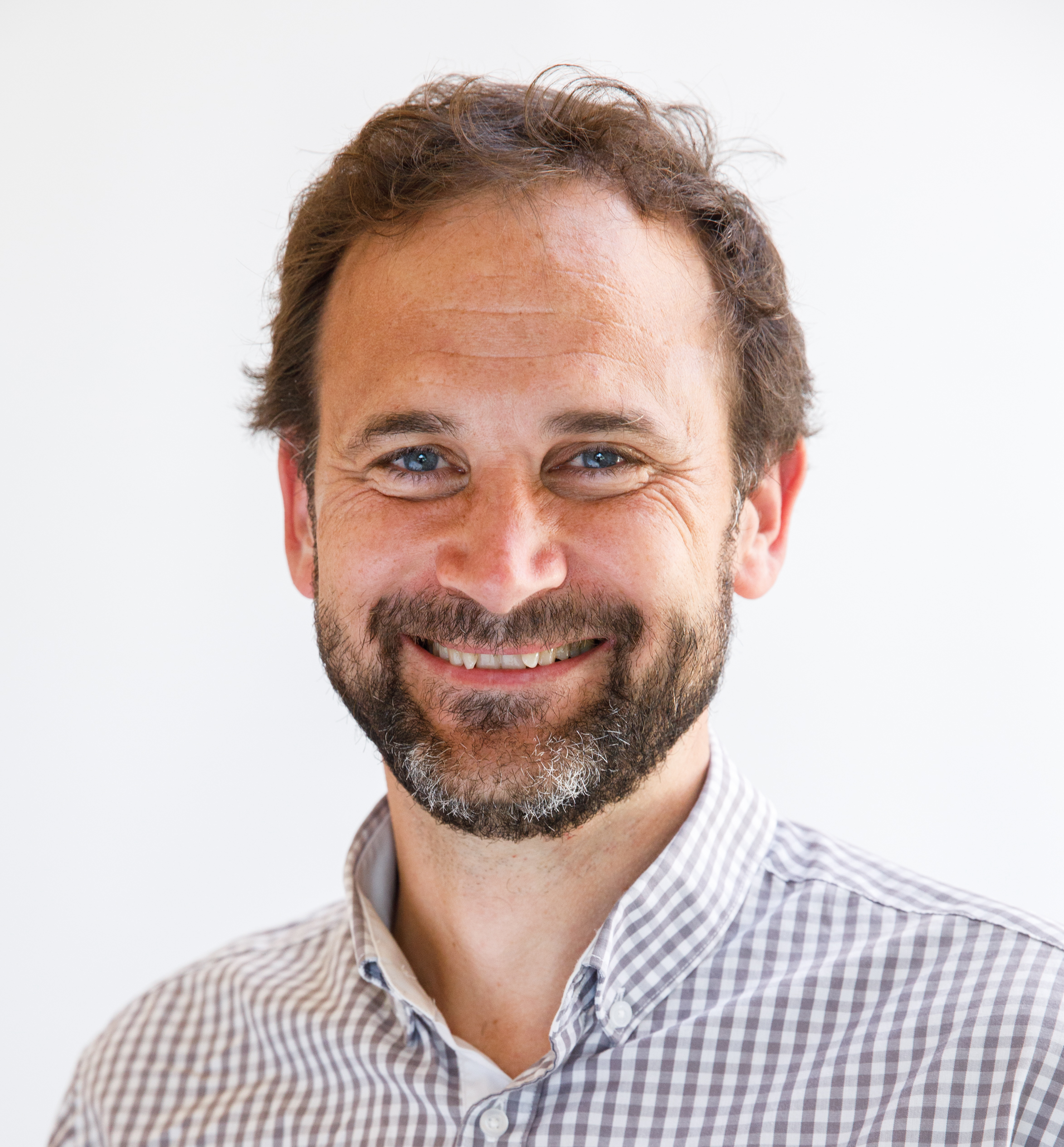
Dr. Antoine Lutz is Director of Research and Team Leader at INSERM at the French Medical Research Institute (INSERM). He is co-leading the team EDUWELL, Education, Learning and Well-being, at Lyon Neuroscience Research Center (CNRL), Inserm U1028, CNRS UMR5292, Lyon 1 University, France.
Education:
- Habilitation to supervise PhD students (HDR) (2016),
- PhD degree, Brain-Cognition-Behaviour Doctoral School (with distinction), University of P. et M. Curie, Paris (VI) (2002) under the supervision of Francisco Varela,
- Ms. in Cognitive Science, with Honors, University of P. et M. Curie, Paris (VI) (1996),
- BA in Philosophy, with Honors, University of Sorbonne, Paris IV (2000),
- Ms. in Engineering from Institut National des Télécommunications, Evry (1996).
Research interests: My research investigates how attention and emotion are regulated during meditation practices, and how sustained contemplative training reshapes consciousness and self-related processes. By integrating first person contemplative traditions with cognitive neuroscience, my work aims to understand how mental training can transform the dynamics of experience. Meditation provides a powerful non pharmacological framework for studying mechanisms of self-regulation in the healthy brain, across ageing, and in psychopathology. This research also examines how contemplative practices influence neural and physiological biomarkers associated with well-being, resilience, and mental health.
More specifically, my research aims to:
- characterize the neurophysiology and neuroplasticity associated with meditation practices, in particular mindfulness, compassion, and non-dual meditation;
- identify behavioral and neural markers of these practices and of their impact on mental health, cognition, and well-being;
- develop and test phenomenological and neurocomputational models of meditation states and meditation based clinical interventions.
At the methodological level, our group uses behavioral paradigms, neuroimaging techniques (EEG, MEG, fMRI), and neurocomputational approaches. We favor a neurophenomenological approach, which makes rigorous and systematic use of first-person reports of subjective experience as a heuristic to describe and quantify the large scale neurodynamics of consciousness. More recently, we have extended this framework by incorporating computational formalisms, an approach we refer to as deep computational neurophenomenology, to investigate the “how” of experience.